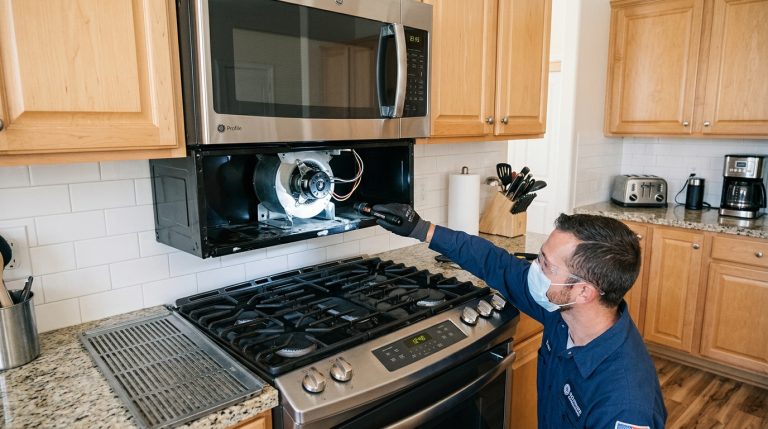
A GE Profile cooktop depends on its control board to manage heating levels, burner operation, temperature settings, and other electronic functions. When the control board begins to fail, the cooktop may behave unexpectedly or stop working altogether. Cooktop Repairing Experts in Tucson can diagnose electronic faults and determine whether the control board, wiring, sensors, or another component is responsible for the problem.
Control board problems can be frustrating because the symptoms are not always obvious. A burner may fail to turn on, the controls may become unresponsive, or the cooktop may display an error code. Understanding the common GE Profile Cooktop Control Board Problems can help homeowners recognize warning signs and seek professional assistance before the issue becomes more complicated.
What Does a GE Profile Cooktop Control Board Do?
The control board is an important electronic component inside a modern GE Profile cooktop. It processes signals from the user controls and communicates with other components to regulate cooking functions.
Depending on the model, the control system may help manage:
- Burner activation
- Heat-level settings
- Temperature control
- Touch controls
- Safety functions
- Error codes
- Sensors
- Heating element operation
When the control board operates correctly, the cooktop should respond consistently to temperature adjustments and commands. If the board develops an electrical or internal fault, several functions can become unreliable.
Common GE Profile Cooktop Control Board Problems
Control board failures can appear in different ways. Some problems are intermittent, while others cause an immediate loss of functionality.
Common signs include unresponsive touch controls, burners that fail to turn on, incorrect temperature responses, random shutoffs, flashing displays, and recurring error codes.
Because multiple components communicate with the control board, it is important not to assume that every electronic symptom means the board itself needs replacement. A professional diagnosis can identify the actual source of the problem.
Cooktop Controls Are Not Responding
One of the clearest signs of a potential control board problem is when the cooktop does not respond to touch commands or control inputs.
You may press the control repeatedly without seeing a response. In some cases, part of the control panel may work while another section remains unresponsive.
Before calling for service, make sure the appliance has power and that the controls are being used according to the manufacturer’s instructions. If the cooktop has power but the controls remain unresponsive, the electronic control system may require inspection.
Burner Does Not Turn On
A burner that does not activate can be caused by several different components, including the heating element, wiring, sensor, switch, or control board.
If only one burner fails, the problem may be isolated to that cooking zone. If several burners stop responding at the same time, the control system becomes a more important area to investigate.
Cooktop Repairing Experts in Tucson can test the affected components and determine whether the control board is sending the correct signals.
Burner Does Not Respond to Temperature Settings
Another possible warning sign is a burner that turns on but does not respond correctly when you change the temperature.
For example, the burner may remain at a similar heat level even after you adjust the setting. It could also respond slowly or unexpectedly.
This problem may be caused by the control board, sensor, switch, or heating component. A proper diagnosis is necessary before replacing any part.
Cooktop Turns Off Unexpectedly
Unexpected shutdowns can be particularly concerning. A cooktop that turns off during normal operation may have an electrical problem, overheating issue, control fault, or power-supply problem.
In some situations, the control board may shut down the appliance because it detects an abnormal condition. However, the control board should not automatically be blamed without testing the complete system.
If the cooktop repeatedly shuts down, avoid continuing to operate it until the cause has been identified.
Error Codes on the Display
Modern GE Profile cooktops may use error codes to indicate specific system problems. An error code can provide useful information about the appliance’s condition, but interpreting it correctly depends on the exact model.
Some codes can relate to sensors, temperature conditions, communication problems, or electronic components.
If an error code continues to appear after following the manufacturer’s recommended reset procedure, professional diagnosis may be appropriate.
Touch Panel Problems
Many GE Profile cooktops use touch-sensitive controls rather than traditional knobs. While these controls offer a clean and modern appearance, electronic problems can affect their performance.
A faulty control board or communication issue may cause delayed responses, missing touch inputs, or controls that activate incorrectly.
Keep the control surface clean and dry because moisture, food residue, or spills can sometimes interfere with touch controls. If the panel remains unreliable after cleaning and proper operation, the electronic system should be inspected.
Incorrect Heating Levels
A cooktop that does not maintain the selected heat level can make everyday cooking difficult. You may select a low setting but notice excessive heating, or select a higher setting and experience insufficient heat.
This can involve the control board, heating element, sensor, or other electronic components.
Professional troubleshooting can determine whether the board is correctly communicating with the heating system.
Intermittent Control Board Problems
Some electronic failures are intermittent. The cooktop may work normally one day and become unresponsive the next.
Intermittent faults can be more difficult to diagnose because the problem may disappear before the technician arrives.
If your cooktop behaves inconsistently, note when the problem occurs, which burner is affected, and whether any error code appears. This information can help a technician identify the issue more efficiently.
GE Profile Cooktop Control Board Problems vs. Element Problems
Control board failures and heating element failures can produce similar symptoms. For example, both can cause a burner not to heat.
The difference is that a heating element problem is generally associated with the physical heating component, while a control board problem can affect the commands and signals sent to different parts of the appliance.
If multiple cooking zones experience unusual behavior, the control system may deserve closer inspection.
This is why replacing the heating element without diagnosis may not solve the problem. The actual fault could be somewhere else in the electrical system.
Electrical and Wiring Issues Can Mimic Control Board Failure
Not every electronic problem is caused by the control board. Loose connections, damaged wires, power interruptions, and other electrical issues can create similar symptoms.
A professional technician can inspect the relevant wiring and connections and perform appropriate electrical tests.
Attempting to inspect or repair internal electrical components without proper knowledge can be dangerous. Cooktops contain electrical components that may present a shock hazard.
How Technicians Diagnose a Control Board Problem
Professional diagnosis usually starts by identifying the exact symptoms and checking the appliance’s power supply.
The technician may then inspect and test:
- Control panel operation
- Control board connections
- Wiring
- Heating elements
- Temperature sensors
- Power supply
- Safety components
- Error codes
- Communication between electronic components
This process helps determine whether the control board is defective or whether another component is responsible.
Should You Repair or Replace the Control Board?
If testing confirms that the control board has failed, the next decision is whether to replace it or consider replacing the entire cooktop.
The right choice depends on several factors, including the cooktop’s age, condition, model, availability of replacement parts, and estimated repair cost.
For a relatively newer cooktop that is otherwise in good condition, control board replacement may be a practical solution.
For an older appliance with several major problems, replacement may make more financial sense.
A professional can help you evaluate both options based on the actual condition of the appliance.
How to Reduce Control Board Problems
Although electronic components can eventually fail, proper appliance use may help reduce unnecessary stress on the system.
Keep the cooktop clean and dry, follow the manufacturer’s operating instructions, and avoid allowing spills to remain around the control panel.
Use appropriate cookware and avoid excessive impact around the control surface.
If the appliance begins displaying unusual behavior, address the issue early instead of continuing to operate it for an extended period.
When Should You Call Cooktop Repair Experts?
Professional service is recommended when your cooktop has persistent electronic problems, unresponsive controls, repeated error codes, unexpected shutdowns, or burners that do not respond correctly.
Cooktop Repairing Experts in Tucson can evaluate the appliance and determine whether the problem involves the control board or another component.
Early diagnosis can help prevent unnecessary part replacement and may reduce the risk of additional electrical problems.
Why Professional Diagnosis Is Important
A control board is one of the more complex components in a modern cooktop. Replacing it without confirming that it is defective can be expensive and may fail to resolve the original problem.
Professional troubleshooting focuses on identifying the root cause. The technician can compare symptoms with test results and determine which component requires attention.
This approach is particularly useful when multiple symptoms occur at the same time.
Frequently Asked Questions
1. What does a GE Profile cooktop control board do?
It manages electronic commands and helps control burner operation, temperature settings, sensors, and other functions.
2. How do I know if my control board is failing?
Common signs include unresponsive controls, incorrect heating, unexpected shutdowns, and recurring electronic errors.
3. Can a bad control board stop a burner from heating?
Yes. A faulty control board may prevent the correct signals from reaching the heating system.
4. Why is my GE Profile cooktop touch panel not working?
Possible causes include moisture, control-panel faults, wiring problems, or a defective control board.
5. Can an error code indicate a control board problem?
It can, but error codes may also indicate sensor, wiring, or other component problems.
6. Can I replace the control board myself?
Control board replacement involves electrical components, so professional service is recommended.
7. Why does my cooktop turn off by itself?
Possible causes include electrical faults, overheating, sensors, power issues, or control system problems.
8. Is a control board repair expensive?
The cost depends on the specific GE Profile model, replacement part, labor, and extent of the problem.
9. Should I replace the cooktop if the control board fails?
Not necessarily. If the cooktop is otherwise in good condition, replacing the control board may be worthwhile.
10. When should I call a Tucson cooktop technician?
Call a professional when controls remain unresponsive, burners behave unexpectedly, error codes persist, or the cooktop repeatedly shuts down.
Final Thoughts
A functioning control board is essential for the reliable operation of a modern GE Profile cooktop. Problems such as unresponsive controls, incorrect heating, unexpected shutdowns, error codes, and inconsistent burner operation may indicate an electronic issue.
However, these symptoms can also come from wiring, sensors, heating elements, switches, or power-supply problems. That is why accurate diagnosis is more important than immediately replacing a component.
Understanding GE Profile Cooktop Control Board Problems can help homeowners recognize potential warning signs and seek professional assistance at the right time. If your cooktop is behaving unpredictably, Cooktop Repairing Experts in Tucson can inspect the appliance, identify the underlying problem, and recommend an appropriate repair solution.
Timely professional service can help restore dependable cooking performance while reducing the possibility of unnecessary component replacement.