Professional microwave repair in Tucson often starts with a simple complaint. The vent fan on the over-the-range microwave has stopped pulling smoke and steam away from the stove. If your microwave vent fan not working has become a daily annoyance, you are not alone. Most causes behind a dead OTR fan are easy to identify without tearing the unit apart. This guide covers why the fan stops working, what you can check yourself, and when the problem needs a professional touch.
What the Microwave Vent Fan Actually Does
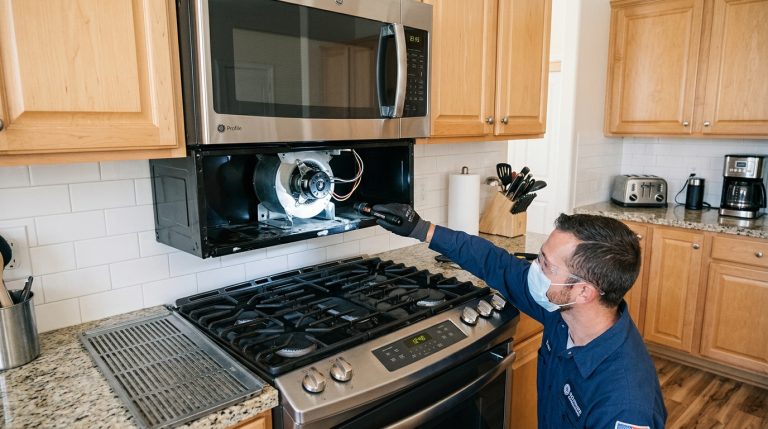
Over-the-range microwaves double as a range hood. They pull smoke, steam, and cooking odors up and away from the stovetop below. The fan sits behind a grille or filter panel on the underside of the microwave. It runs on its own motor, separate from the microwave’s cooking function.
When that fan stops spinning, or airflow drops noticeably, one of a handful of common issues is usually to blame.
Common Reasons a Microwave Vent Fan Stops Working
Grease and Dirt Buildup
This is by far the most frequent cause. Over months of use, grease from cooking settles on the fan blades, the filter, and the motor housing. Enough buildup slows the blades down. As a result, it can throw them out of balance, or even jam the motor completely, making a healthy motor sound dead.
Worn or Burned Out Fan Motor
Every motor has a limited lifespan. Heat, grease exposure, and years of continuous use wear down the bearings and windings. A motor nearing the end of its life often hums or clicks without spinning. Sometimes it runs slower than it used to before stopping altogether.
Faulty Fan Switch
The switch that controls fan speed can fail on its own, separate from the motor. Press the fan button and hear nothing at all, not even a hum? A bad switch is a common suspect here, especially on units with mechanical rocker switches that see heavy daily use.
Blocked or Disconnected Ductwork
Fan spins but airflow feels weak? In that case, the issue might not be the fan at all. First, check for a duct that has come loose behind the wall. Also look for a bird’s nest or debris blocking the outside vent cap. In addition, a duct crushed during installation can choke off airflow, even with a healthy motor.
Control Board Issues
Newer microwave models use electronic touch controls. A failing control board on these units can stop sending power to the fan circuit even though every other function works normally. This one is harder to diagnose without testing equipment.
Capacitor Failure
Some fan motors rely on a small run capacitor to keep them spinning at full speed. A weak or failed capacitor often shows up as a fan that starts but runs sluggishly. Sometimes it hums without turning at all.
Signs Your OTR Microwave Fan Is Dead
A few patterns help narrow down the cause before you open anything up.
No sound at all when you switch the fan on? That points toward the switch, wiring, or control board. Humming without spinning usually means a seized motor or bad capacitor. Spinning but barely moving air suggests grease buildup on the blades or a blocked duct. And a fan that has gradually gotten quieter and weaker over months shows the classic signs of grease accumulation.
Safe DIY Checks You Can Do
Before assuming the worst, try these steps.
- Remove and clean the grease filter. It is usually a metal mesh panel that slides out from the bottom of the microwave. Soak it in warm, soapy water and scrub away buildup.
- Check the fan blades for visible grease coating if the panel is accessible without removing internal covers. Wipe them down with a degreasing cleaner.
- Confirm the breaker or circuit hasn’t tripped. A partial power issue can sometimes affect only the fan circuit on certain models.
- Inspect the outside vent cap on the exterior wall or roof for blockages like leaves, debris, or nesting insects and birds.
- Listen closely when you turn the fan on. Note whether you hear humming, clicking, or complete silence, since this detail helps a technician diagnose the issue faster.
What Not to Do
Avoid removing the outer housing of the microwave or accessing the fan motor and wiring directly unless you have real experience with these appliances. Over-the-range microwaves sit close to electrical connections for the cooking function, and it is easy to disturb wiring that was never meant to be touched during a simple fan repair. If cleaning the filter and checking the vent cap does not resolve the issue, bring in help.
When to Call a Professional
Cleaning the filter and confirming clear ductwork should fix simple cases. However, if your microwave vent fan not working persists after those steps, the problem likely involves the motor, switch, capacitor, or control board. This is where skilled microwave repair in Tucson makes the difference between a quick fix and a bigger headache.
A technician can test the motor windings, check the switch continuity, and confirm whether the control board is sending proper voltage to the fan circuit.
A Plus Appliance Repair services over-the-range microwave fans across Tucson homes. Specifically, technicians diagnose whether the fan motor, switch, capacitor, or ductwork is behind the reduced airflow, and they carry the common replacement parts needed to get it running the same visit in many cases.
Typical Cost of Fixing a Microwave Vent Fan
Fan motor and switch repairs tend to be some of the more affordable microwave fixes, since these are standard replacement parts on most OTR models. Control board repairs, on the other hand, run higher due to the cost of the part itself.
A technician offering experienced microwave repair in Tucson should give you a clear estimate once the exact cause is identified, rather than replacing parts by guesswork.
How to Prevent Fan Problems Going Forward
Clean the grease filter every one to two months during regular cooking use. This keeps the fan motor free of buildup. Wipe down the visible fan blades during that same cleaning routine too.
Run the fan for a few minutes after cooking rather than switching it off immediately, since this clears lingering grease-laden air before it settles on the components. In addition, have the ductwork checked periodically, especially in homes with birds or debris near the exterior vent, since blockages can build up unnoticed.
Final Thoughts
A microwave vent fan not working rarely signals that the whole appliance needs replacing. More often, grease buildup, a worn motor, or a blocked duct is behind it, and each has a straightforward fix once properly diagnosed. If cleaning and basic checks do not bring the fan back to life, reach out for professional microwave repair in Tucson to get your kitchen ventilation working again without guesswork or wasted parts.
Frequently Asked Questions
Why did my microwave vent fan suddenly stop working?
A sudden stop usually points to a seized motor, a blown fan switch, or a tripped circuit, rather than gradual wear. Check the breaker first, then listen for humming when you switch the fan on.
Can grease buildup really stop a fan from working?
Yes. Thick grease on the fan blades adds weight and friction. This can slow the motor significantly or stop it from spinning altogether, especially on units that have not been cleaned in a long time.
Is it normal for the fan to get quieter over time?
A gradual drop in fan noise and airflow is common as grease builds up on the blades and filter. Regular filter cleaning usually restores normal performance.
Do I need to replace the whole microwave if the fan dies?
No. The fan motor, switch, and capacitor are all individually replaceable parts on most over-the-range microwaves. The rest of the appliance keeps working normally after a fan repair.
How often should I clean the grease filter?
Most manufacturers recommend cleaning the filter every one to two months for regular cooking use. Households that fry or grill frequently should clean it more often.
Why does my fan hum but not spin?
A humming fan that does not spin usually means the motor bearings are seized or the capacitor has failed. Both prevent the motor from starting even though it is receiving power.
Can a blocked outside vent cause weak airflow even with a working fan?
Yes. If the exterior vent cap is blocked by debris, nesting material, or a crushed duct, the fan can spin normally while air barely moves, since it has nowhere to go.
Is it safe to run the microwave’s cooking function if only the fan is broken?
Generally yes. The fan and the cooking function operate on separate circuits, so a broken fan does not usually affect microwave heating. A technician can confirm this for your specific model.
How much does it typically cost to repair a microwave fan?
Costs vary by the part involved. Filter and switch repairs sit on the lower end, while control board replacements cost more. A technician can give an accurate quote after inspection.
When should I call a technician instead of cleaning it myself?
Call a professional if cleaning the filter and checking the vent cap does not restore normal fan operation, or if you hear grinding, clicking, or no sound at all. Do not open the unit yourself at that point.