Water in bottom of refrigerator compartments, especially under the crisper drawers, is usually caused by a clogged or frozen defrost drain. When the drain is blocked, meltwater from the automatic defrost cycle can’t reach the drain pan, so it overflows into the fresh-food section. Flushing the drain with warm water often fixes it. If the leak keeps coming back, the defrost system itself usually needs repair.
Pulling out a crisper drawer and finding a puddle underneath is one of the most common refrigerator complaints from Tucson homeowners. The good news is that water in bottom of refrigerator drawers rarely means the appliance is dying. In most cases, it points to a simple blockage in the defrost drain system.
The bad news is that ignoring it can lead to mold, spoiled produce, and damaged flooring. It can also cause ice buildup that eventually affects cooling. This guide covers how the drain system works, the real causes of water under crisper drawers, what you can safely check yourself, and when to call for professional refrigerator repair in Tucson.
How Your Refrigerator’s Defrost Drain Works
Most modern refrigerators are frost-free. Behind a panel in the freezer sits an evaporator coil that gets extremely cold. On some models, this coil is in the fresh-food section instead. Moisture from the air inside the fridge freezes onto that coil as frost.
Several times a day, the refrigerator runs a defrost cycle. A heater warms the coil for a short period, the frost melts, and the water drips into a trough that leads to a drain hole.
From there, the water travels down a drain tube to a shallow pan underneath the refrigerator, near the compressor and condenser fan. Heat and airflow from those parts evaporate the water, so you normally never see it.
When anything blocks that path, the water has only one place to go: back into the cabinet. It collects at the lowest point, which is usually the floor beneath the crisper drawers.
What Causes Water in Bottom of Refrigerator Drawers?
1. A Defrost Drain Clogged With Debris
A defrost drain clogged with crumbs, food particles, or bits of produce is the number one cause. Mold and slime can also grow inside the drain tube, narrowing it over time until water backs up. The leak often shows up right after a defrost cycle, which is why the puddle can seem to appear overnight.
2. A Frozen Drain Line
Sometimes the drain isn’t dirty but frozen. This happens when the defrost heater doesn’t fully melt the ice. Some models also use a small drain heater or a metal drain strap to keep the drain warm, and if that part fails, water can refreeze inside the tube and form an ice plug.
A frozen drain often shows a clear pattern: water in the fresh-food section plus ice buildup on the freezer floor or back wall.
3. A Leaking Water Filter or Supply Line
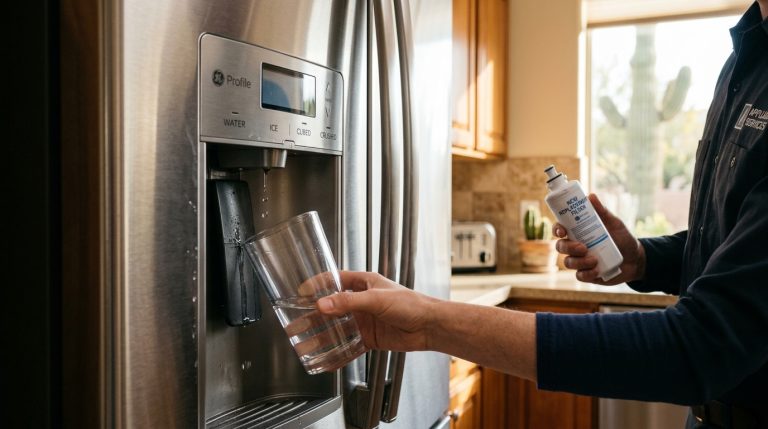
Some refrigerators have the water filter inside the cabinet. If the filter housing is cracked or the filter isn’t fully seated, water can drip down the back wall and collect under the crisper drawers. Refrigerators with ice makers and water dispensers also have water lines that can loosen or crack over time.
4. Damaged Door Gaskets and Monsoon Humidity
Tucson’s air is dry for most of the year, but humidity rises sharply during monsoon season, which runs from June 15 to September 30. If a door gasket is torn, flattened, or dirty, humid air leaks in, condenses on cold surfaces, and runs down to the bottom of the cabinet.
To test a gasket, close the door on a dollar bill. If the bill slides out with no resistance, the seal isn’t tight in that spot.
5. A Refrigerator That Isn’t Level
Most refrigerators are designed to sit slightly higher in the front than in the back. This helps the doors swing shut and lets water flow toward the drain. If the unit tilts forward, water collects at the front of the compartment instead. Your owner’s manual explains how to adjust the leveling legs or rollers.
6. Normal Produce Moisture
Fresh fruits and vegetables release moisture. A few droplets inside the drawers are normal, especially when the humidity slider is set to high. A standing puddle under the drawers is not normal.
Quick Troubleshooting Guide
| What You See | Likely Cause | DIY or Pro? |
|---|---|---|
| Puddle under crisper drawers after a defrost | Clogged defrost drain | Usually DIY |
| Puddle plus ice on the freezer floor | Frozen drain or defrost failure | Pro |
| Drips running down the back wall | Water filter or supply line leak | DIY check, then pro |
| Condensation on shelves and walls | Door gasket leak or humidity | DIY gasket cleaning or replacement |
| Water on the kitchen floor | Drain pan, water line, or overflow | Pro |
How to Fix Water Under Crisper Drawers: Step by Step
If the leak comes from a clogged drain, you can often clear it yourself. Check your owner’s manual first, because drain locations vary by brand and design.
- Unplug the refrigerator or switch off its breaker before working inside it.
- Remove the crisper drawers and the glass shelf above them, then wipe up the standing water.
- Find the drain opening. On many models it’s at the back of the fresh-food compartment below the crisper drawers. On many top-freezer models, it’s on the freezer floor behind a rear panel. Drain placement is different on side-by-side and French door models, so check the manual for your exact design.
- Use a turkey baster or large syringe to flush warm water into the drain. Warm water melts ice and loosens debris. A flexible pipe cleaner can gently clear buildup. Never use sharp tools, because they can puncture the drain tube or nearby cooling lines. Use only a small, controlled amount of water, and never hose or spray water inside the cabinet. Here’s why a refrigerator should never be cleaned with a water spray.
- Check the drain pan under the refrigerator. You can usually reach it by removing the front toe grille or the rear access panel. Empty and clean the pan, and make sure it isn’t cracked.
- Plug the refrigerator back in and watch it for 24 to 48 hours.
Suppose flushing clears the drain, but water in bottom of refrigerator drawers comes back within a few days or weeks. That means the drain is probably refreezing, and the real problem is in the defrost system rather than the drain.
Signs the Problem Is Bigger Than a Clog
Call a technician if you see ice forming on the freezer floor or back wall. The same goes for heavy frost on the evaporator cover, a fresh-food section that runs warmer than usual, water leaking onto the kitchen floor, or a puddle that returns after you’ve cleared the drain.
These symptoms often point to a failed defrost heater, defrost thermostat, defrost timer, or control board. Diagnosing them means testing electrical parts with a multimeter and sometimes removing interior panels. This is where professional refrigerator repair in Tucson saves time and prevents accidental damage.
A failing defrost system can also block airflow and leave your fridge warm but freezer cold. For other symptoms that shouldn’t wait, review these 10 warning signs your refrigerator needs professional repair.
Why You Shouldn’t Ignore the Puddle
A small leak may seem like a minor nuisance, but it causes real problems. Standing water encourages mold and bacteria right next to your fresh food. Water that drips onto the floor can slowly damage hardwood, laminate, and cabinet bases.
If a frozen drain is the cause, the ice can keep growing until it blocks airflow and throws off temperature control. Acting early is usually the least expensive path, whether that means a quick drain flush or a visit from professional refrigerator repair in Tucson.
When to Call Professional Refrigerator Repair in Tucson
Call A Plus Appliance Repair if any of these apply:
- You’ve flushed the drain, but the leak keeps coming back.
- You see ice building up in the freezer.
- You’re not comfortable removing interior panels.
Our certified technicians service all major brands, including Samsung, LG, Whirlpool, GE, Frigidaire, KitchenAid, Maytag, and Sub-Zero. We carry common parts for faster turnaround.
We offer same-day and next-day appointments with two-hour arrival windows between 8:00 AM and 4:00 PM. The service call fee is $60 in Central Tucson, $80 in North and South-East Tucson, and $90 on the West side, and it’s waived when you approve the repair. Here’s what an appliance service call fee covers.
You get an upfront estimate before any work begins, and every repair is backed by a warranty on parts and workmanship. That’s what you should expect from professional refrigerator repair in Tucson.
Call (520) 485-5885 or book your appointment online.
Related reading:
- If ice is also building up in your freezer, read Why Is Your Freezer Not Working Properly?
- For an overview of the most frequent fixes, see What Is the Most Common Refrigerator Repair?
Frequently Asked Questions
Is water in bottom of refrigerator drawers dangerous?
It isn’t an immediate danger, but it should be fixed. Standing water encourages mold and bacteria, can damage flooring, and may signal a defrost problem that will eventually affect cooling. If water reaches electrical parts or pools near an outlet, unplug the unit and call a technician.
How do I know if my defrost drain is clogged?
The most common sign is water pooling under the crisper drawers or on the floor of the fresh-food section, often right after a defrost cycle. Ice around the drain opening or on the freezer floor also suggests a blocked or frozen drain.
Can I use bleach or vinegar to clean the defrost drain?
Warm water is the safest choice. Some manufacturers suggest a mild mix of warm water and baking soda. Avoid harsh chemicals unless your owner’s manual approves them, because residue can affect plastic parts and cause odors near your food.
How much does it cost to fix water in bottom of refrigerator compartments in Tucson?
Clearing a drain costs far less than replacing defrost parts. A Plus Appliance Repair gives you an upfront quote after diagnosis, and the service call fee is waived when you approve the repair. For an exact price, schedule professional refrigerator repair in Tucson with our team.
Why does the water come back after I clear the drain?
If the drain keeps refreezing, the defrost heater, defrost thermostat, drain heater, or control board may not be working correctly. Finding the failed part requires electrical testing, which is best left to a technician.