A refrigerator is one of the most important appliances in any home. It keeps food fresh, protects perishable items, and provides convenient access to cold drinks and frozen foods. When it stops working correctly, even a small problem can quickly become stressful.
The good news is that many refrigerator problems are common and repairable. Issues such as poor cooling, damaged door seals, clogged drain systems, compressor problems, and ice maker failures can affect refrigerator performance.
Understanding the most common refrigerator repairs can help you recognize warning signs early. If your refrigerator is also having freezer problems, searching for a Top-Rated Freezer Repair Technician Near Me can help you find professional assistance for diagnosis and repair.
Refrigerator Not Cooling Properly
One of the most common refrigerator problems is inadequate cooling.
You may notice that food is not staying cold enough or that the refrigerator compartment feels warmer than normal. Several components can cause this issue.
Possible causes include:
- Dirty condenser coils
- Blocked air vents
- Faulty evaporator fan
- Damaged door gasket
- Thermostat problems
- Defrost system failure
- Compressor problems
- Refrigerant-related issues
Start by checking that the temperature setting has not been changed accidentally. Also make sure food containers are not blocking the refrigerator’s air vents.
If the refrigerator continues to warm up, professional diagnosis may be necessary.
Refrigerator Compressor Problems
The compressor is a major component of the refrigeration system. It helps circulate refrigerant and maintain the temperature inside the appliance.
When a compressor develops a problem, the refrigerator may struggle to cool properly. You may also hear unusual noises or notice that the compressor runs continuously.
Compressor repairs can be more complicated than basic refrigerator maintenance. A technician needs to determine whether the compressor itself has failed or whether another component is causing the cooling problem.
Because compressor replacement can be expensive, accurate diagnosis is important before making a repair decision.
Damaged Refrigerator Door Seal
The door gasket creates a tight seal around the refrigerator door. If the gasket becomes cracked, loose, or damaged, warm air can enter the refrigerator.
This can make the appliance work harder to maintain the correct temperature.
A damaged gasket may also cause frost buildup or increased energy use.
Inspect the gasket around the entire door. Look for cracks, gaps, or areas where the seal has become loose.
Replacing a worn door gasket is generally much simpler than replacing major refrigeration components, so addressing the problem early can help prevent additional strain on the appliance.
Refrigerator Ice Maker Problems
Ice maker issues are another common repair request.
An ice maker may stop producing ice because of a frozen water line, blocked filter, faulty water inlet valve, temperature issue, or defective ice maker assembly.
Before calling for service, check whether the ice maker is turned on and whether the refrigerator has a sufficient water supply.
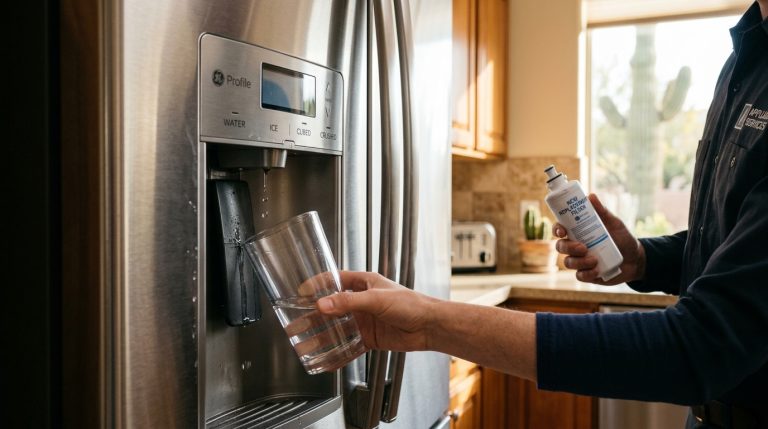
If the water filter is overdue for replacement, follow the manufacturer’s instructions for installing a new one.
If the ice maker still does not produce ice, a technician can test the water supply and internal components.
Refrigerator Water Leaks
Water underneath or inside a refrigerator can indicate a drainage or water-supply problem.
Common causes include:
- Clogged defrost drain
- Frozen drain tube
- Loose water connection
- Damaged water line
- Faulty water filter installation
- Drain pan problems
A small amount of condensation may be normal, but repeated pooling water should not be ignored.
Water can damage flooring and cabinets if the problem continues.
If you cannot identify the source of the leak, professional inspection can help determine the cause.
Explore the Dishwasher Repair Services in Tucson.
Refrigerator Making Strange Noises
Refrigerators naturally make various sounds while operating. Fans, compressors, ice makers, and refrigerant movement can all produce normal operating noises.
However, a sudden change in sound can indicate a problem.
Possible warning signs include:
- Loud buzzing
- Grinding
- Repeated clicking
- Rattling
- Humming that becomes unusually loud
- Fan noises
A clicking sound may occur when the refrigerator attempts to start but has difficulty doing so. Grinding may indicate a fan or motor problem.
If an unusual sound continues, have the refrigerator inspected before the issue becomes more serious.
Refrigerator Defrost Problems
Modern refrigerators use an automatic defrost system to prevent excessive frost buildup.
If the defrost system fails, ice can accumulate around the evaporator area. This can block airflow and reduce cooling performance.
Signs of a possible defrost problem include:
- Heavy frost buildup
- Refrigerator becoming warm
- Freezer remaining extremely cold
- Reduced airflow
- Fan running continuously
A technician can inspect the defrost heater, thermostat, sensor, and control components to determine which part is causing the problem.
Freezer Not Freezing Properly
A refrigerator and freezer work together, but freezer problems can have several different causes.
If your freezer is not maintaining the correct temperature, check the temperature setting and make sure air vents are not blocked.
Excessive frost can also restrict airflow.
A failing evaporator fan, door gasket, defrost system, or temperature sensor may contribute to freezing problems.
If the freezer continues to perform poorly, searching for a Top-Rated Freezer Repair Technician Near Me can help you find professional assistance.
Early diagnosis can prevent additional food loss and reduce the risk of a larger appliance failure.
Dirty Condenser Coils
Condenser coils help release heat from the refrigeration system. When they become covered with dust and debris, the refrigerator may have to work harder to maintain the correct temperature.
Dirty coils can contribute to:
- Poor cooling
- Longer compressor run times
- Increased energy consumption
- Excessive heat around the appliance
- Premature component wear
Follow the manufacturer’s cleaning instructions before attempting to clean the coils.
If the refrigerator still struggles to cool after basic maintenance, another component may be responsible.
Faulty Refrigerator Thermostat
The thermostat helps regulate the refrigerator’s internal temperature.
If it becomes inaccurate or fails, the refrigerator may become too warm or too cold.
A faulty thermostat can sometimes cause inconsistent temperatures. Food may freeze in the refrigerator compartment, or the appliance may fail to cool sufficiently.
Because temperature problems can have several causes, testing is important before replacing the thermostat.
A professional technician can determine whether the thermostat is actually defective.
Refrigerator Control Board Problems
Modern refrigerators rely on electronic control boards to manage various functions.
A control board can control temperature regulation, fans, defrost cycles, ice makers, and other operations.
If the board develops a problem, several refrigerator functions may become unreliable.
Electronic issues can be difficult to diagnose without the appropriate tools and experience.
If your refrigerator has multiple unrelated symptoms at the same time, professional diagnosis may help identify whether the control system is involved.
When Should You Call a Refrigerator Technician?
Some refrigerator problems can be addressed through basic maintenance. Others require professional repair.
Consider contacting a technician if:
- The refrigerator is not cooling
- The freezer is not freezing
- The compressor runs continuously
- The refrigerator makes unusual noises
- Water is leaking
- Frost keeps building up
- The ice maker stops working
- The refrigerator repeatedly loses temperature
- The appliance trips a circuit breaker
A professional technician can inspect the refrigerator and determine whether the problem involves a mechanical, electrical, or refrigeration component.
Refrigerator Repair in Tucson
Tucson homeowners may experience refrigerator problems caused by normal wear, heavy use, dust accumulation, or component failure.
If you need refrigerator repair Tucson, choose a service provider with experience working on different refrigerator brands and models.
A local technician can evaluate the appliance, identify the cause of the problem, and recommend the appropriate repair.
When scheduling service, provide as much information as possible. Tell the technician what symptoms you noticed, when the problem started, and whether the refrigerator displays an error code.
This information can make the diagnostic process more efficient.
How Regular Refrigerator Maintenance Helps
Routine refrigerator maintenance Tucson can help keep your appliance operating efficiently.
Clean the condenser area according to the manufacturer’s recommendations. Keep the interior organized and avoid blocking air vents.
Check the door gasket regularly and clean it when necessary.
Replace water filters according to the manufacturer’s recommended schedule.
Also pay attention to changes in temperature, noise, frost, and energy use. Small changes can sometimes indicate an emerging problem.
Maintenance cannot prevent every refrigerator failure, but it can help reduce avoidable issues and identify problems earlier.
Should You Repair or Replace Your Refrigerator?
When a refrigerator develops a serious problem, you may wonder whether repair is worthwhile.
Consider the appliance’s age, overall condition, repair cost, and history of previous failures.
A newer refrigerator with a minor component problem may be worth repairing.
An older refrigerator with repeated expensive repairs may be a better candidate for replacement.
A technician can inspect the appliance and explain the available options.
Avoid replacing the refrigerator based solely on one symptom. Proper diagnosis can help you make a more informed decision.
Why Professional Diagnosis Matters
Refrigerator symptoms can have multiple possible causes.
For example, poor cooling does not automatically mean the compressor has failed. The problem could be caused by dirty coils, a fan, thermostat, defrost system, airflow restriction, or another component.
Replacing an expensive part without confirming the diagnosis can lead to unnecessary costs.
A qualified technician can test the refrigerator systematically and identify the component that is actually causing the problem.
Final Thoughts
The most common refrigerator repairs involve cooling problems, damaged door seals, ice maker failures, water leaks, defrost issues, fan problems, and electrical or control component failures.
Some problems can be reduced through regular cleaning and maintenance. However, persistent cooling issues, unusual noises, leaks, or freezer problems often require professional diagnosis.
If your freezer is not maintaining the correct temperature, searching for a Top-Rated Freezer Repair Technician Near Me can help you find experienced repair service.
Addressing refrigerator problems early can help protect your food, reduce unnecessary energy use, and potentially prevent a minor issue from becoming a major repair.
Frequently Asked Questions
1. What is the most common refrigerator repair?
Refrigerators commonly need repairs for cooling problems, faulty door seals, ice maker failures, drainage issues, fans, and temperature controls.
2. Why is my refrigerator not cooling?
Common causes include dirty coils, blocked airflow, faulty fans, damaged door seals, thermostat problems, or defrost system failures.
3. Why is my freezer not freezing?
A freezer may not freeze because of airflow restrictions, frost buildup, a faulty fan, door seal problems, temperature issues, or other component failures.
4. How do I know if my refrigerator compressor is bad?
Warning signs can include poor cooling, unusual noises, repeated clicking, or a compressor that runs continuously. Professional testing is needed for confirmation.
5. Why is my refrigerator leaking water?
Common causes include a clogged defrost drain, frozen drain tube, loose water connection, damaged water line, or improperly installed filter.
6. Can a damaged door seal affect refrigerator cooling?
Yes. A damaged gasket allows warm air to enter, which can make the refrigerator work harder and cause temperature problems.
7. How often should refrigerator maintenance be performed?
Basic cleaning and inspections should be performed regularly according to the manufacturer’s recommendations, with filters replaced on their recommended schedule.
8. Is it worth repairing an old refrigerator?
It depends on the refrigerator’s age, condition, repair cost, and history. A technician can help compare repair and replacement options.
9. When should I call a Top-Rated Freezer Repair Technician Near Me?
Call a technician when the freezer remains warm, develops excessive frost, leaks, makes unusual noises, or continues having temperature problems.
10. Can regular maintenance prevent refrigerator breakdowns?
Maintenance can reduce problems caused by dirt, blocked airflow, worn seals, and neglected filters, but it cannot prevent every component failure.