A dishwasher not drying your dishes properly is a complaint that has grown more common as machines have changed the way they dry, and while it sometimes points to a failed part, it far more often comes down to rinse aid, the drying setting, or how you load, which is why qualified dishwasher repair in Tucson starts by asking how your machine dries before assuming anything is broken. When you open the door to a dishwasher not drying the load, and everything is clean but wet, the fix may be as simple as filling the rinse aid. This guide explains the two main ways dishwashers dry, why newer machines leave more water behind, and every step to get your dishes coming out dry again.
Two Ways Dishwashers Dry, and Why It Matters
Older dishwashers used a heated dry element, a coil at the bottom that heats the air and bakes the dishes dry. Many newer, more efficient machines use condensation drying instead. In condensation drying, a very hot final rinse heats the dishes, and when the cycle ends the water evaporates off the hot dishes and condenses on the cooler stainless tub walls, then drains away. This uses far less energy but depends heavily on a hot final rinse and on rinse aid to help water sheet off. If you have a newer machine and dishes wet after dishwasher cycles, the drying method is probably the reason, not a fault. Knowing which type you have shapes every fix that follows.
Rinse Aid Is the Single Biggest Factor
Rinse aid is not optional for good drying, especially on condensation drying machines. It lowers the surface tension of water so it slides off dishes as sheets instead of clinging as droplets, which means less water to evaporate and faster, more complete drying. Many people skip it, then wonder why the dishwasher not drying problem persists and the machine leaves dishes wet. Fill the rinse aid dispenser and keep it filled. Most machines have a setting to increase the rinse aid dose, and turning it up helps in hard water. If your dishes improve dramatically after adding rinse aid, you have found the answer. This is the first and most effective thing to try.
Plastic Just Does Not Dry Well
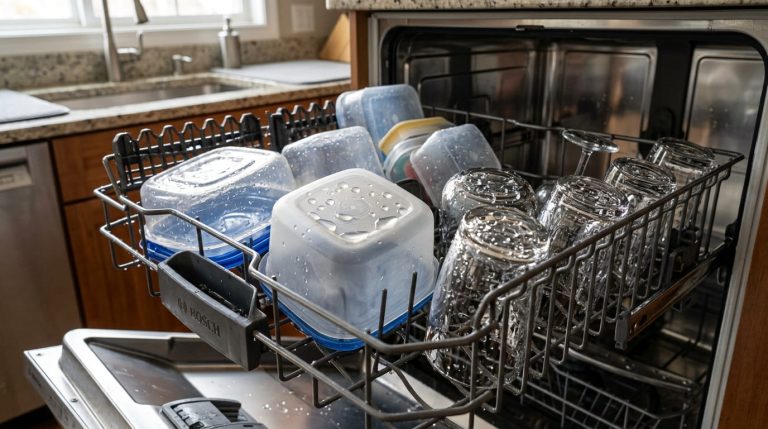
If your glasses and dishes dry but your plastic containers come out wet, that is normal physics, not a broken machine. Plastic has very little thermal mass, so it does not hold the heat that drives condensation drying, and water beads up and stays. Stainless and ceramic hold heat and dry well, while plastic lags behind. Placing plastic items on the top rack, using rinse aid, and hand drying the few plastic pieces that stay wet is the practical answer. Expecting plastic to come out bone dry from a condensation drying machine sets you up for disappointment.
Check Your Drying Setting
Many dishwashers offer a heated dry option, an extended dry, or a sanitize cycle that raises the final rinse temperature. If drying is poor, make sure a drying option is actually turned on, since eco cycles often skip or reduce heated drying to save energy. Selecting heated dry or a hotter cycle gives the load more heat to work with. If you always run the shortest or most economical cycle, switching to one with a proper dry step can solve dishes wet after dishwasher complaints on its own.
Water Temperature and the Final Rinse
Both drying methods depend on a hot final rinse. If the water entering the machine is not hot enough, the dishes never get hot enough to dry. Run the kitchen hot tap until it runs hot before starting the dishwasher so it begins with hot water. If your home’s water heater is set low, the final rinse may not reach the temperature needed for good drying. A hotter final rinse leaves the dishes warm enough to shed their moisture as the cycle ends.
How You Load Changes Drying
Loading habits have a big effect. Cups and bowls placed flat side up collect a puddle of water that never drains, so angling items so water runs off is important. Overcrowding blocks air and traps moisture between dishes. Nesting items together leaves wet spots where they touch. Give dishes space, angle bowls and cups, and avoid stacking. One more habit helps a lot. Unload the bottom rack first, because water pooled on upper items drips down onto dishes below when you open the door and pull the top rack out first. Unloading bottom to top keeps that drip off your already dry lower dishes.
Crack the Door Open at the End
A simple trick improves drying on almost any machine. When the cycle ends, open the door an inch or two and let the hot, humid air escape and the dishes air dry for a while before unloading. This works especially well on condensation drying machines and in a dry Tucson climate, where the surrounding air pulls moisture off quickly. Some newer dishwashers even do this automatically by popping the door open at the end. If yours does not, doing it by hand costs nothing and helps noticeably.
When a Part Has Actually Failed
Sometimes the cause is a real fault. On machines with a heated dry element, a burned out element leaves dishes wet no matter what, and it is a testable, replaceable part. A broken rinse aid dispenser that will not release rinse aid leaves the load wet even when the reservoir is full. A faulty heating element or thermostat that keeps the final rinse from getting hot enough hurts both cleaning and drying. If you have filled the rinse aid, selected a heated dry, run hot water, and loaded well, and the dishes still come out soaked, one of these parts may be the reason.
What You Can Safely Check Yourself
The friendly checklist covers most cases. Fill the rinse aid and turn up the dose. Select a heated dry or hotter cycle. Run the hot tap before starting so the machine gets hot water. Load with space, angle cups and bowls, and avoid nesting. Unload bottom rack first. Crack the door open at the end to air dry. Accept that plastic dries poorly and hand dry those few pieces. Most dishwasher not drying complaints improve a lot with these steps. If the dishes stay soaked after all of them, a heating element or dispenser fault is worth checking.
The Tucson Climate Can Actually Help
One advantage of drying dishes in the desert is that the surrounding air is very dry, which pulls moisture off dishes faster than it would in a humid climate. You can put that to work. Cracking the door open at the end of the cycle lets that dry air do part of the drying for free, and it is more effective here than almost anywhere else. If your kitchen is warm and dry, even a short air dry after the cycle leaves dishes noticeably drier. The flip side is that hard water leaves spots as the water evaporates, which is why rinse aid matters so much locally. Pairing rinse aid with an open door air dry gives you the best of both, dishes that dry quickly in the dry air and sheet off cleanly without the mineral spotting that plain evaporation would leave behind.
When to Call for Qualified Dishwasher Repair
If rinse aid, settings, water temperature, and loading are all handled and the dishwasher still leaves dishes wet, the heated dry element, the rinse aid dispenser, or the heating element and thermostat may have failed. Testing those parts confirms whether the final rinse is reaching temperature and whether the dry element still works. This is where qualified dishwasher repair in Tucson helps, because a technician can measure the rinse temperature and test the element and dispenser, then replace only the part that failed. Restoring a proper hot final rinse improves both drying and cleaning at the same time.
If your dishes stay wet after every drying fix, a local team that handles dishwasher repair in Tucson can test the heating and dispenser parts and get your loads coming out dry.
The Bottom Line
A dishwasher not drying is usually about rinse aid, the drying setting, water temperature, and loading rather than a broken machine, and most dishwasher not drying cases improve once those are handled, especially on newer condensation drying models. Fill the rinse aid, choose a heated dry, run hot water, load with space, unload bottom first, and crack the door at the end. Accept that plastic dries poorly. If the dishes still come out soaked after all of that, a failed heating element or dispenser is the likely cause and worth a professional check.
Related Reading
For more help with related problems, see our guides on signs your dishwasher heating element is going bad, why a dishwasher heating element keeps failing, and how hard water causes dishwasher problems in Tucson.
Frequently Asked Questions
Why is my dishwasher not drying the dishes anymore?
The most common reasons are empty rinse aid, an eco cycle that skips heated drying, a final rinse that is not hot enough, or loading that traps water. Fill the rinse aid, select a heated dry, run hot water first, and load with space, since those fix most cases.
Does rinse aid really help dishes dry?
Yes, a lot. Rinse aid lowers the surface tension of water so it sheets off dishes instead of beading, leaving less water to evaporate. On newer condensation drying machines it is nearly essential, so keep the dispenser filled and turn up the dose in hard water.
Why does plastic stay wet when everything else dries?
Plastic has very little thermal mass, so it does not hold the heat that drives condensation drying, and water beads and clings. Stainless and ceramic dry well because they hold heat. Put plastic on the top rack, use rinse aid, and hand dry the few pieces that stay wet.
Should I unload the top or bottom rack first?
Unload the bottom rack first. Water pooled on upper items drips down when you open the door and pull the top rack out, wetting your already dry lower dishes. Unloading bottom to top keeps that drip off the clean, dry items below.
Will cracking the door open help my dishes dry?
Yes. Opening the door an inch or two at the end lets hot, humid air escape and the dishes air dry, which works especially well in a dry Tucson climate. Some newer machines pop the door open automatically for this reason.
Could low water temperature be why nothing dries?
Yes. Both drying methods depend on a hot final rinse, so if the incoming water is not hot enough the dishes never get warm enough to dry. Run the kitchen hot tap until it runs hot before starting, and check that your water heater is not set too low.
How do I know if the heating element failed?
If you have filled the rinse aid, selected heated dry, run hot water, and loaded well, and the dishes still come out soaked, the heated dry element or the heating element may have failed. Those are testable parts that a technician can confirm and replace.
When should I call a professional about drying?
Call when rinse aid, settings, water temperature, and loading are all correct but the dishes stay wet. That points to a failed heated dry element, a broken rinse aid dispenser, or a heating element not reaching temperature, which need qualified dishwasher repair in Tucson.