A dishwasher overflowing across your kitchen floor is one of the few appliance failures that turns into water damage within minutes, so the first job is to stop the flow before you worry about the cause, and knowing both the emergency steps and when to call same-day dishwasher repair in Tucson can save your floors and cabinets. When a dishwasher overflowing situation starts, water and electricity are together in one place, which makes safety the priority. This guide gives you the immediate steps to stop the flood, then walks through the real causes so you can prevent it from happening again and know when to bring in help.
First: Stop the Flood Safely
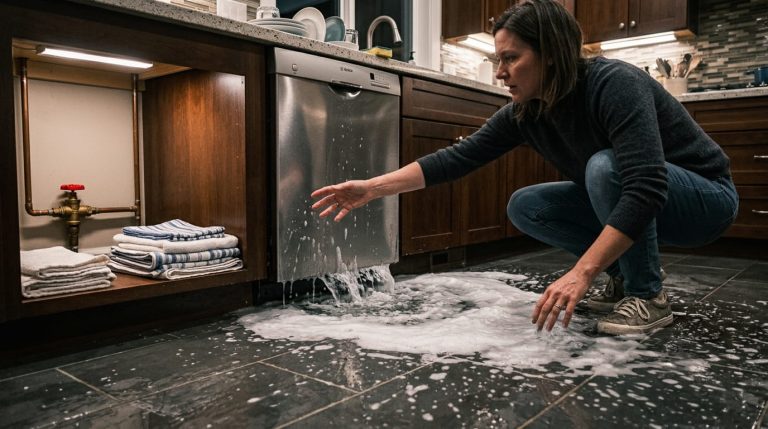
The moment you see water spreading, act in order. Cancel the cycle if you can reach the panel safely without standing in water. Then cut the power to the dishwasher at the breaker rather than touching the plug with wet hands, since water and electricity together are dangerous. Next, turn off the dishwasher’s water supply valve under the sink so no more water can enter. Finally, open the door carefully, since a rush of water may spill out, and begin mopping up with towels. Getting the water off the floor quickly limits damage to flooring, cabinets, and anything in nearby lower cabinets. Only after the area is safe and dry should you look for the cause.
The Most Common Cause: Too Much Suds
Before assuming a broken part, think about what detergent you used. The single most frequent reason for a dishwasher flooding kitchen floors is using regular dish soap or laundry soap instead of dishwasher detergent, or using far too much detergent. These create a massive volume of suds that expands and forces water and foam out the door. If you ran out of dishwasher detergent and reached for hand soap, that is almost certainly your answer. To clear it, scoop out the suds, run rinse only cycles with no detergent until the foam is gone, and switch to proper dishwasher detergent in the correct amount. This cause of a dishwasher overflowing looks alarming but is completely harmless once you know it.
A Stuck Float Lets the Tub Overfill
Inside the tub sits a float that rises with the water and signals the machine to stop filling when the level is right. If that float sticks in the down position, jammed by debris or mineral scale, the machine keeps adding water past the safe level until it spills out the door. Check the float, usually a plastic dome or cup near the front of the tub, and make sure it moves up and down freely. Clearing anything binding it can stop the overfill. A stuck float is a leading mechanical cause of a dishwasher overflowing, and a dishwasher overflowing from a jammed float is often an easy fix.
A Faulty Water Inlet Valve Stuck Open
The water inlet valve opens to let water in and closes to stop it. If the valve fails in the open position, water keeps flowing into the machine even when it should have stopped, and the tub overfills and floods. This can happen when the valve wears out or when mineral scale from hard Tucson water keeps it from closing fully. A valve stuck open often means the machine floods even when it is off, since water flows without the machine calling for it. This is a repair that involves water and electrical connections and usually calls for a technician.
A Clogged Drain Backs the Water Up
Sometimes the machine fills the right amount but cannot drain, so the water has nowhere to go and backs up and over. A clogged drain hose, a blocked filter, a plugged air gap, or a clogged garbage disposal connection can all trap the water in the tub. If you also see standing water in the bottom after cycles, drainage is the likely path. Our guide on standing water in the bottom of the dishwasher covers the drainage side in detail. A drain that cannot clear will keep causing overflows until it is opened up.
The Drain Connection and Garbage Disposal
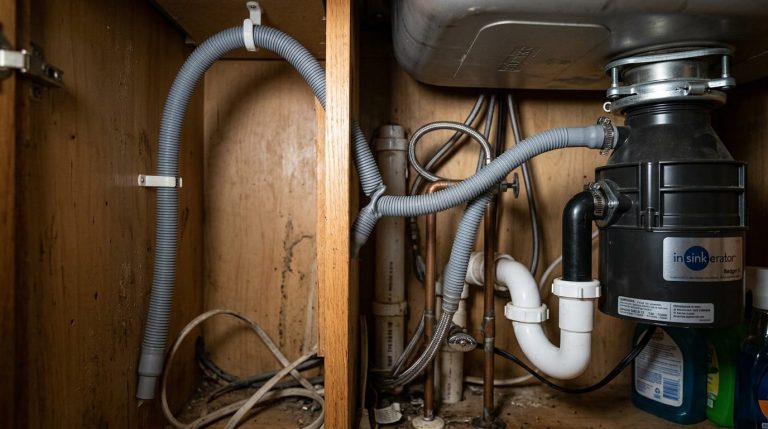
If your dishwasher drains through a garbage disposal, a common setup, two things cause overflows. A new disposal may still have the knockout plug in place, blocking the dishwasher drain entirely, which floods the machine on its first run after installation. And a disposal full of food or grease can back water up into the dishwasher. Running the disposal to clear it, and confirming the knockout plug was removed during installation, prevents this kind of flood. It is a frequent cause right after a kitchen remodel or a disposal replacement.
Door Seal and Gasket Failures
While a worn door gasket usually causes a smaller leak rather than a full overflow, a badly failed seal combined with any overfill turns a drip into a flood. If the machine overfills for another reason, a good seal is the last line of defense, and a bad one lets far more water escape. Checking and cleaning the door gasket is worth doing as part of preventing future floods, even if it is not the primary cause.
Why Tucson Hard Water Plays a Role
Hard water scale is a quiet contributor to overflows because it builds up on the float and the inlet valve, the two parts that control the water level. Scale can jam a float or keep a valve from closing, both of which lead to overfilling. Running a dishwasher cleaner or a hot vinegar cycle now and then clears the scale that shortens the life of these parts. In a hard water city, this maintenance is not optional if you want to avoid repeat problems.
What You Can Safely Check Yourself
After the flood is stopped and cleaned, the safe checklist is short. Confirm you used dishwasher detergent in the right amount, not hand soap. Check that the float moves freely. Make sure the drain, filter, and disposal connection are clear. Clean the door gasket. Run a rinse cycle to test. Most overflows trace to suds, a stuck float, or a drain clog, and those you can handle. If the machine overfills even when off, or keeps flooding after these checks, a valve or control fault is the likely cause.
Protecting Your Home From the Next Overflow
Once you have dealt with one flood, a few habits lower the odds of another. Keep a couple of old towels within reach of the kitchen so you can act fast if it happens again. Learn where your dishwasher’s water shutoff valve is under the sink before you need it, since fumbling for it during a flood costs precious minutes. Use only dishwasher detergent in the correct amount, which removes the most common cause outright. Run a monthly cleaning cycle to keep scale off the float and inlet valve. And if your machine has ever overfilled even once for a mechanical reason, have it looked at rather than waiting to see if it repeats, because water damage to floors and cabinets costs far more than a repair. A little preparation turns a potential disaster into a minor cleanup.
When to Call for Same-Day Dishwasher Repair
An overflow is a problem worth fixing fast, because every flood risks your floors and cabinets. If the machine overfills even when powered off, the water inlet valve is likely stuck open, which needs replacing. If it floods from a drain backup you cannot clear, or a float switch or control that will not stop the fill, those need testing too. This is where same-day dishwasher repair in Tucson matters, because a technician can find whether a valve, float switch, or control is behind the flooding and fix it before the next load causes water damage. Fast action on an overflow saves far more than the repair costs.
If your dishwasher keeps overflowing after the basic checks, a local team that handles dishwasher repair in Tucson can find the cause and stop the flooding.
The Bottom Line
When a dishwasher overflowing starts, cut the power at the breaker, shut off the water supply, and mop up before anything else. Then find the cause of the dishwasher overflowing, which is most often too much suds from the wrong detergent, a stuck float, or a clogged drain. In hard water Tucson, scale on the float and inlet valve is a common contributor. If the machine overfills even when off or keeps flooding, a valve or control fault needs a professional. Handling an overflow quickly protects your home from real water damage.
Related Reading
For more help with related problems, see our guides on water inlet valve problems, how hard water causes dishwasher problems in Tucson, and the top 5 dishwasher parts that fail first.
Frequently Asked Questions
What should I do first when my dishwasher overflows?
Stop the flow safely. Cancel the cycle if you can reach the panel without standing in water, cut the power at the breaker instead of touching a wet plug, shut off the water supply valve under the sink, then open the door carefully and mop up. Safety and stopping the water come before finding the cause.
Why is my dishwasher overflowing with suds?
The most common reason is using regular dish soap or laundry soap instead of dishwasher detergent, or using too much. These create suds that force water out the door. Scoop out the foam, run rinse only cycles until it clears, and switch to proper dishwasher detergent.
Can a stuck float cause the dishwasher to overflow?
Yes. The float signals the machine to stop filling. If it sticks in the down position from debris or scale, the machine keeps adding water until it spills out. Make sure the float near the front of the tub moves up and down freely.
Why does my dishwasher flood even when it is turned off?
That usually means the water inlet valve is stuck open and letting water flow without the machine calling for it. A worn valve or one held open by hard water scale needs replacing, and this repair generally calls for a technician.
Could a clogged drain make the dishwasher overflow?
Yes. If the machine fills but cannot drain, the water backs up and over. A clogged drain hose, blocked filter, plugged air gap, or a full garbage disposal can all trap the water. Clearing the drain path stops this kind of overflow.
My dishwasher flooded right after a new garbage disposal. Why?
A new disposal often ships with a knockout plug that must be removed for the dishwasher to drain through it. If the plug was left in place, the dishwasher cannot drain and floods on its first run. Removing the plug fixes it.
Does hard water in Tucson contribute to overflows?
It does. Scale builds up on the float and the inlet valve, the parts that control the water level, and can jam the float or keep the valve from closing. A periodic hot vinegar or dishwasher cleaner cycle clears the scale and helps prevent overflows.
When should I call a professional about an overflow?
Call quickly if the machine overfills even when off, floods from a drain backup you cannot clear, or keeps flooding after you rule out suds and a stuck float. Those point to a valve, float switch, or control fault that needs same-day dishwasher repair in Tucson.